
How to Mix Metals in Your Home
Studio LUNAREY’s featured author: Lara Parker from Studio Luna Rey
Lara Parker
is a Junior Designer based in the Bay Area of California, specializing in residential interior design at Studio Lunarey. With a degree in Interior Architecture and background in fine art, she brings a strong creative perspective to her work. Lara’s expertise lies in creating detailed design drawings and visuals that transform concepts into real-life designs. With her passion for interior design, she supports principal designer at Studio Lunarey to create curated and timeless interiors.
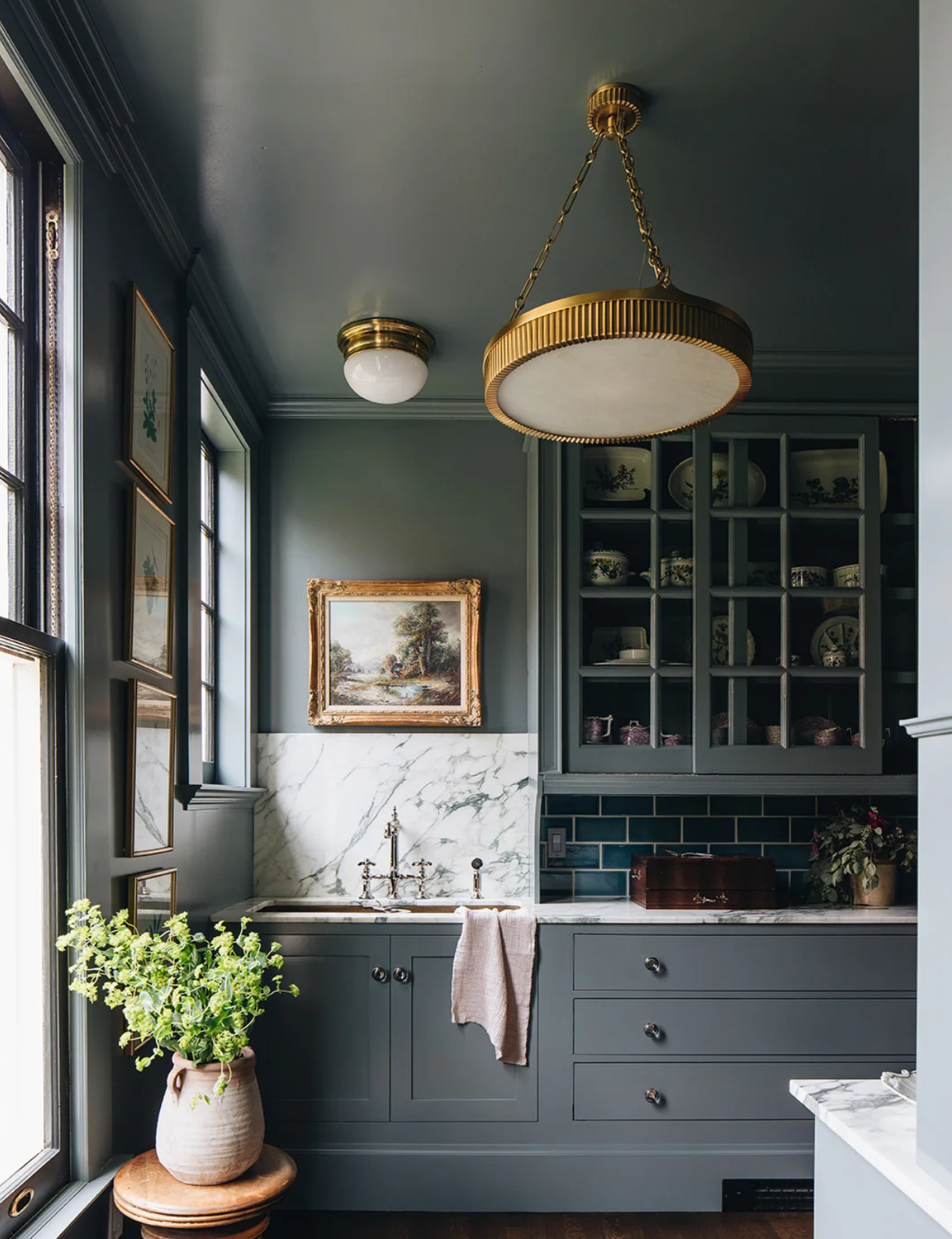
Photo Credit: Jean Stoffer Design, Stoffer Photography Interiors
One of the first things clients ask us is: can I mix my light fixtures with my faucet if they're different metals? And the answer is always yes — actually, we prefer it that way.
A room where everything matches perfectly can feel a little too coordinated. A little flat. Mixing metals is how you get that look that feels like it was built over time, collected, not just purchased all at once.
Here's how we think about it.
What Does "Mixing Metals" Actually Mean?
It just means using more than one metal finish in the same room. Instead of every single piece — your faucet, your cabinet pulls, your pendant lights — being the exact same finish, you allow two or three different metals to coexist.
When it works, you don't even notice the different metals. You just notice the room looks really good.
We love this approach for several reasons:
The combination of metals showcases visual dimension, and highlights key design elements
This offers greater flexibility when pairing metals with surrounding furniture and décor
The space feels more intentional and less overly uniform
The Metals We Use Most
We put metals into three simple groups:
Warm metals — Brass, gold, bronze, copper. These bring richness to a space. They work especially well with natural materials like wood or linen.
Cool metals — Chrome, nickel, stainless steel. Clean and modern. Great if you want a crisper feel.
Neutral metals — Matte black, gunmetal, iron. Honestly, these are our favorite supporting players. They go with almost everything and help tie the room together.
And then there's finish — which matters just as much as the metal itself. Brass in a polished finish is completely different from brass in a brushed or antiqued finish. Here's a quick breakdown:
Antique — Looks aged, worn. Gives character.
Polished — Shiny, mirror-like. A statement.
Matte — Soft, non-reflective. Very livable.
Satin — Between matte and polished. Our most versatile option.
Brushed — Subtle texture, directional lines. Refined without being too precious.
Hammered — Small indentations, more artisan feel. Beautiful in a light fixture or statement pull.
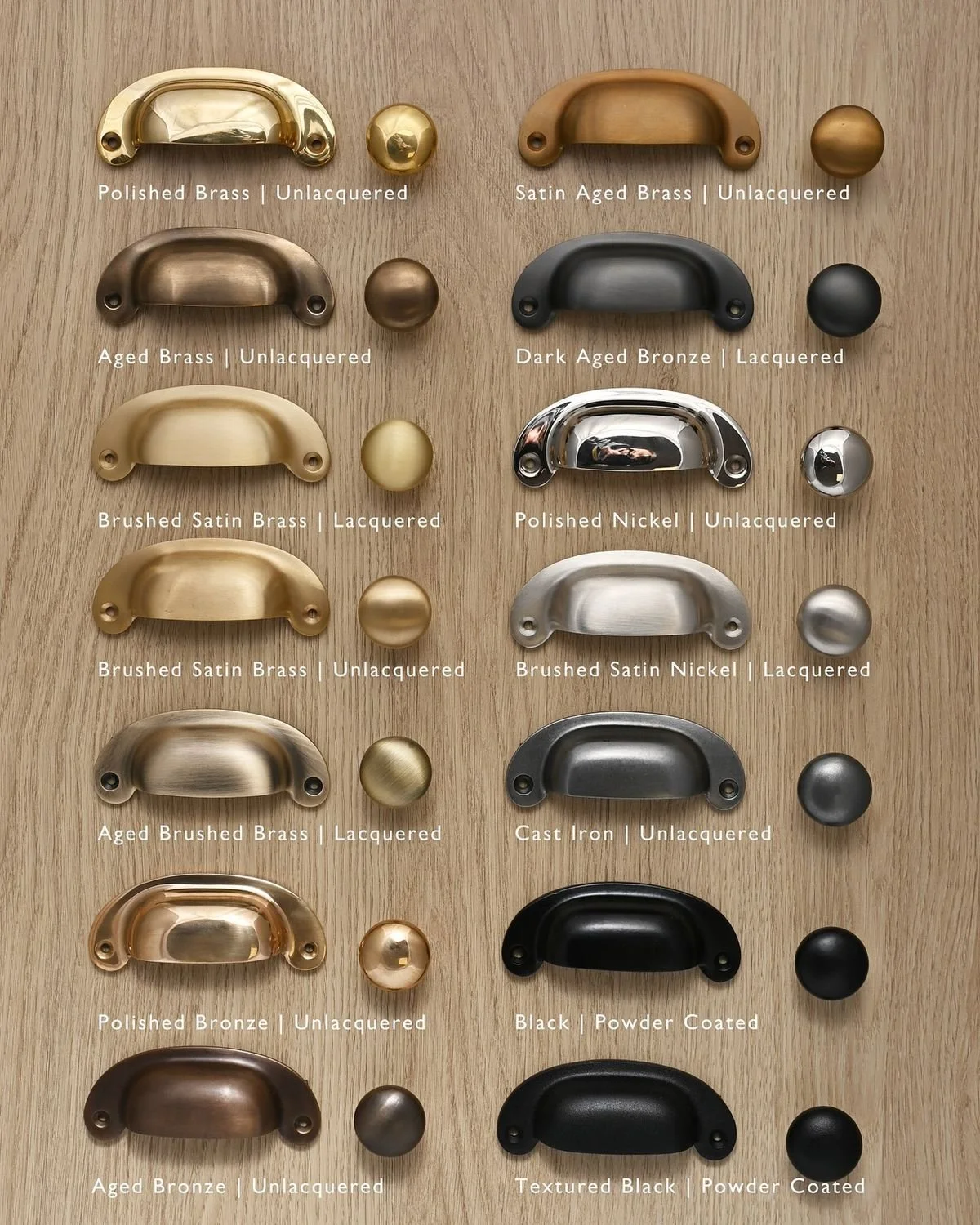
Photo Credit: Yester Home Hardware & Homeware
How We Actually Do It
We always start with one dominant metal — the finish that shows up the most. Your cabinet hardware, your faucet, your door handles. That's your foundation. Then we layer in one or two more to support it.
We follow the 60-30-10 rule:
60% — Your dominant metal. The one doing most of the work.
30% — A secondary metal. Usually in lighting or plumbing fixtures.
10% — An accent. Mirrors, small décor pieces, a tray, a frame.
If you're only working with two metals, think 75-25. One leads, one supports.
The Honest Part
You don't need to overthink this. The goal is not to be perfect — it's to be intentional. Pick your dominant metal with care, and let the others support it quietly. That's really all it takes to make a room feel designed.
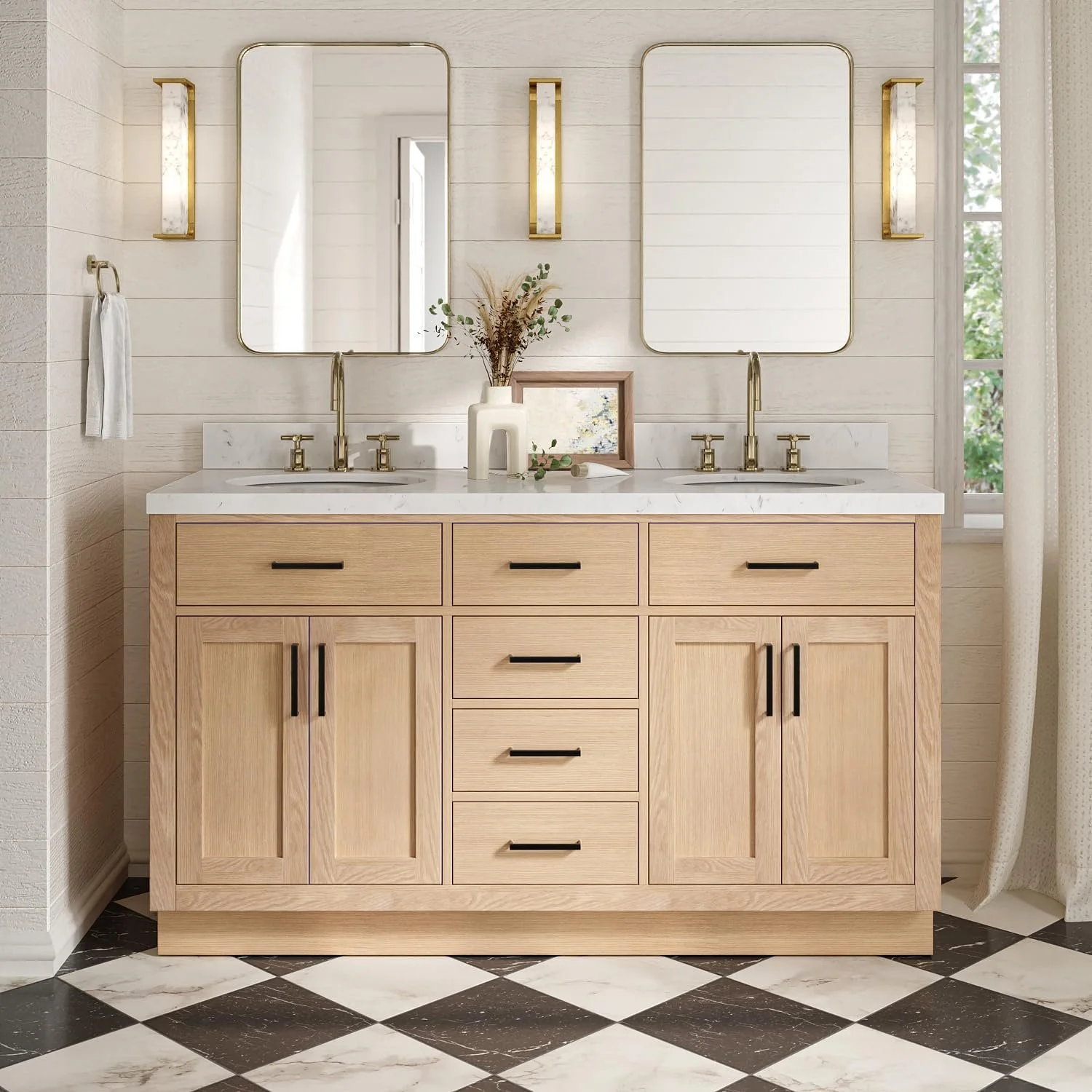
Photo Credit: ARIEL Store
Want Help Getting It Right?
This is exactly the kind of detail we love to work through with clients. Studio Lunarey is a boutique interior design studio in the San Francisco Bay Area — we work on residential projects where the details really matter.