
A beautifully designed kitchen should do more than look organized. It should make everyday life feel easier.
For individuals with ADHD, the kitchen can become an unexpectedly demanding environment. Preparing a meal requires planning, sequencing, remembering ingredients, managing time and shifting attention between multiple tasks. When the surrounding environment adds unnecessary distractions, these everyday activities can become more mentally exhausting.
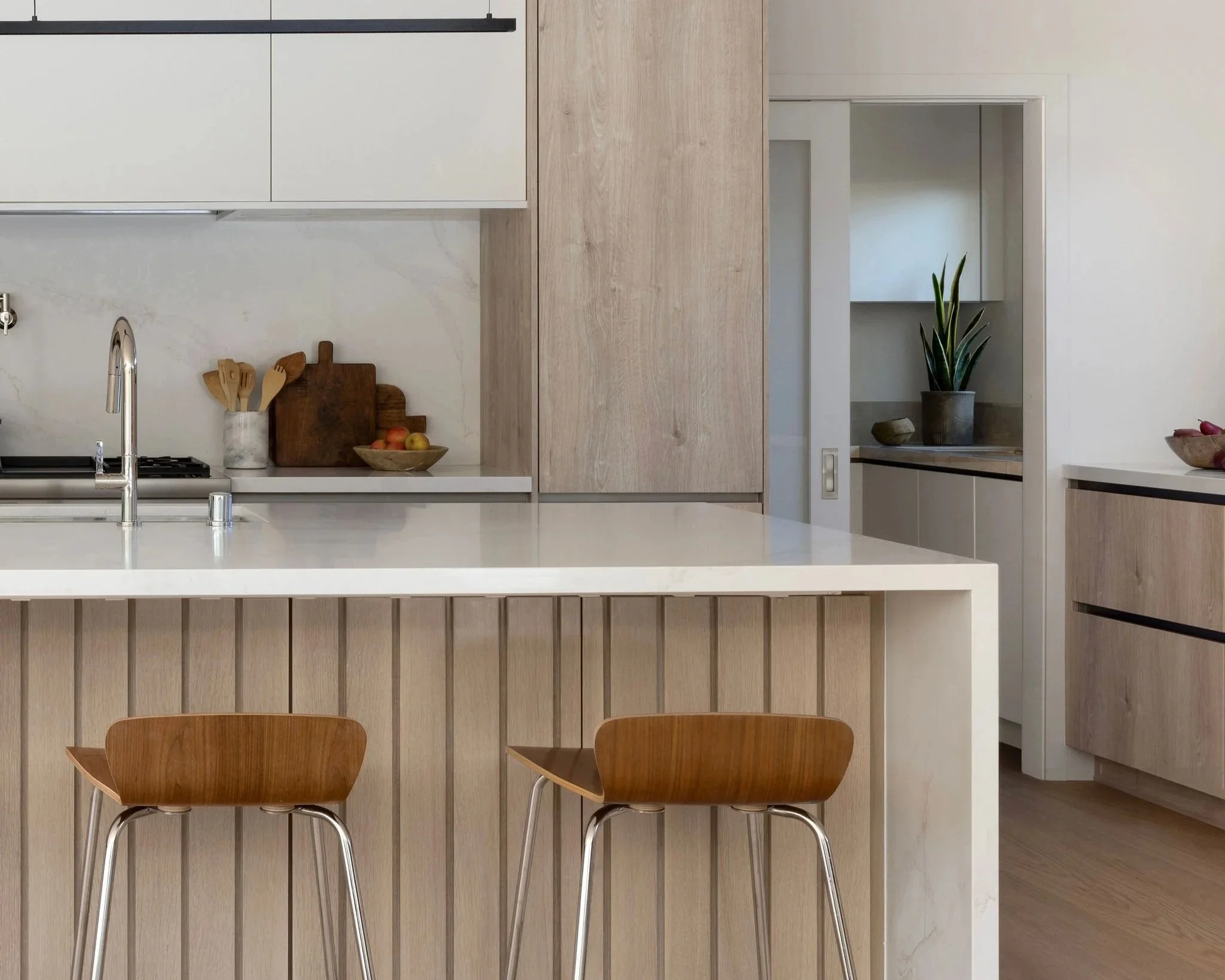
The relationship between visual clutter and cognitive load
Research on visual attention suggests that competing stimuli can make it more difficult for the brain to prioritize relevant information. In a kitchen filled with appliances, packaging, utensils and decorative objects, each visible element potentially competes for attention.
However, completely concealing everything is not necessarily the answer. For some individuals with ADHD, keeping frequently used objects visible can serve as a helpful reminder.
The challenge is finding a balance between visual simplicity and functional visibility.
Designing around human behavior
Rather than organizing a kitchen exclusively around aesthetics, we can design it around the activities that take place within it.
A dedicated breakfast station, for example, can bring coffee supplies, mugs and frequently used appliances together. Deep drawers positioned near the cooking area can reduce unnecessary movement, while clearly defined storage zones can make finding and returning objects more intuitive.
These seemingly small architectural decisions can reduce the number of decisions required throughout the day.
Lighting deserves equal consideration. Layered illumination, including focused task lighting and softer ambient lighting, allows the kitchen to adapt to different activities without relying on a single lighting condition.
Moving beyond minimalism
An ADHD-friendly kitchen does not have to be minimalist. It can be expressive, warm, textured and deeply personal.
The objective is not to remove personality from the environment but to introduce a sense of order that supports the individual using it. Open shelving may work beautifully for one person, while concealed cabinetry may feel more restorative for another.
At Studio Lunarey, we approach residential interior design as a relationship between people and their environments. Understanding how someone thinks, moves and experiences their home is just as important as selecting materials, finishes and furnishings.
Ultimately, thoughtful kitchen design is not simply about creating a beautiful room. It is about creating an environment that supports the rhythms of everyday life.
When our surroundings work with us rather than against us, even ordinary moments can become more effortless.
Let's Design a Home That Works With Your Mind
Your home should reflect not only your aesthetic preferences but also the way you think, feel and navigate everyday life.
At Studio Lunarey, we combine thoughtful spatial planning, functional design and an understanding of human behavior to create personalized interiors that support everyday wellbeing.
Whether you are planning a kitchen remodel or reimagining your entire home, we invite you to explore how intentional interior design can make a meaningful difference in your daily life.
Schedule a design consultation with Studio Lunarey and discover what it means to live in a space designed around you.